Procedures Are Essential — Until Reality Changes
Checklists exist for a reason.
They improve consistency, reduce mistakes, and help people perform complex tasks safely. In industries where risk is high, procedures provide structure when pressure increases.
But there is a common assumption that follows: If the checklist was followed, the operation was successful.
Reality is rarely that simple.
Some of the most significant failures occur not because procedures were ignored, but because the situation evolved beyond what the procedure anticipated.
When Reality Stops Following the Script
Procedures are built around known conditions. They are designed using lessons learned, historical experience, and expected risks.
The challenge is that real-world environments are constantly changing, such as: weather shifts, equipment behaving unexpectedly, information arrives late, new hazards emerge or priorities change.
A checklist can guide action, but it cannot account for every variable.
Eventually, there comes a point where success depends less on following a procedure and more on recognizing when conditions have changed.
Compliance Is Not Readiness
Organizations often measure success through compliance.
Were all required steps completed? Was the procedure followed correctly? These questions matter, but they do not necessarily measure readiness.
Readiness is the ability to adapt when the unexpected happens.
Two people can follow the same checklist and achieve the same outcome, yet one may be far better prepared to identify emerging risks, adjust to changing conditions, and make effective decisions under pressure.
Compliance measures process. Readiness measures performance. The difference matters.
The Human Element
High-performing teams understand that procedures are a foundation, not a substitute for judgment.
They continuously assess their environment, question assumptions, and adjust when reality no longer matches the plan.
This ability to adapt is often what separates successful outcomes from failures in complex environments.
The challenge is that adaptation is difficult to measure. Traditional evaluations typically show whether a task was completed, not how people responded when uncertainty appeared.
As a result, organizations can gain confidence in procedural compliance while remaining blind to performance gaps.
How BioTwin® Helps
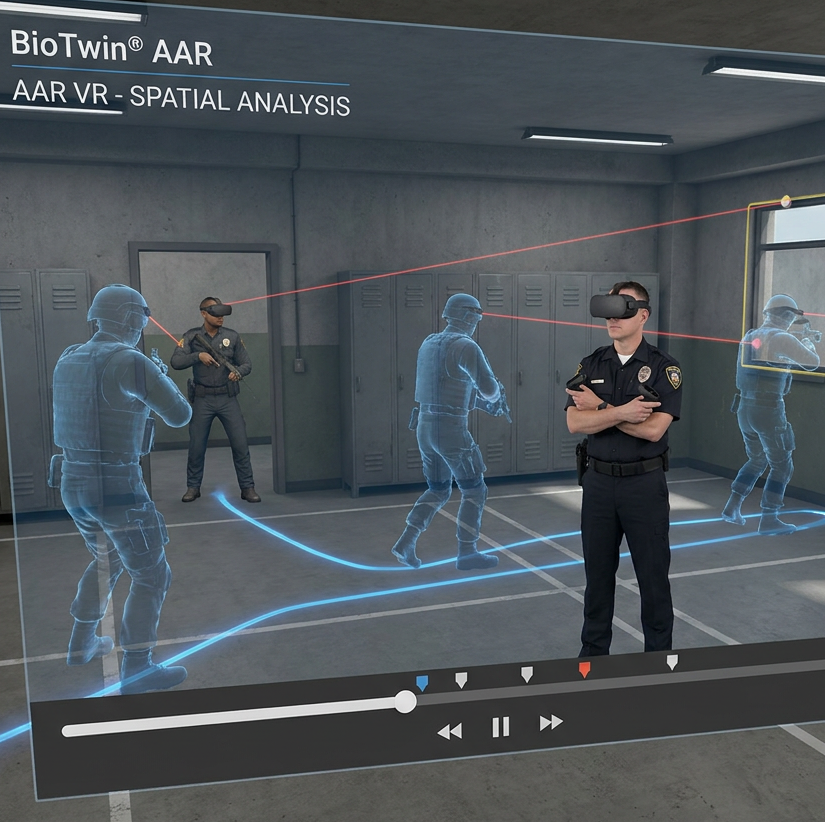
BioTwin® helps organizations understand what happens between the checklist and the outcome.
By capturing first-person video, gaze behavior, event markers, and optional biometric data during training and assessment activities, BioTwin® provides insight into how people perceive, decide, and respond as conditions change.
During after-action review, instructors and evaluators can examine where attention was directed, how decisions evolved, and how individuals adapted when situations became more complex.
This creates a clearer picture of readiness than compliance alone can provide.
Readiness Lives Beyond the Checklist
Procedures remain essential, but no checklist can anticipate every condition, every risk, or every decision that must be made in the field.
The strongest organizations understand that safety and performance depend on more than following steps. They depend on people who can adapt when those steps are no longer enough.
Because failure rarely happens when everything goes according to plan.
It happens when reality doesn't.