Attention Is the New Operational Resource
Every organization wants more data, more dashboards ,more alerts, mmore sensors and more notifications.
The assumption is simple: more information leads to better decisions.
But in mission-critical environments, the opposite is often true.
The real challenge is no longer access to information. It is the ability to focus on the right information at the right time.
Attention has become one of the scarcest resources in modern operations.
Drowning in Signals
Most operational roles today require people to process information from multiple sources simultaneously.
Screens compete for attention. Alerts arrive continuously. Messages interrupt workflows. New information appears before previous information has been fully processed.
The result is not necessarily greater awareness.
It is often greater cognitive load.
When everything appears important, distinguishing what is actually important becomes increasingly difficult.
The risk is not a lack of information, it is signal overload.
The Myth of Multitasking
Many organizations still treat multitasking as a valuable skill.
In reality, people rarely perform multiple cognitive tasks at the same time. Instead, they rapidly switch between them.
Every switch comes with a cost. Attention fragments. Context is lost. Small delays accumulate. Important details become easier to miss. In high-consequence environments, these costs matter.
A missed alert, an overlooked indicator, or a delayed response may seem insignificant in isolation. Combined, they can affect decision quality, situational awareness, and overall performance.
When Interfaces Become Part of the Problem
Technology is designed to help people make better decisions.
Yet every new interface, display, and notification also creates additional demands on attention.
The question is no longer if information is available, it is whether people can effectively absorb and act on it.
As systems become more sophisticated, organizations must consider not only system performance but human performance. The best technology in the world provides limited value if the people using it are overloaded.
Attention is finite. Operational demands are not.
How BioTwin® Helps
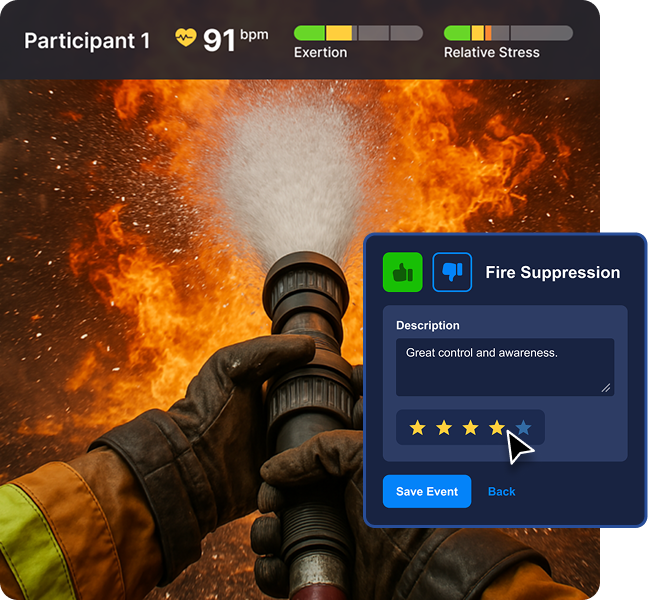
BioTwin® helps organizations understand how attention is distributed during training and assessment activities.
By capturing first-person video, gaze behavior, event markers, and optional biometric data, BioTwin® provides objective insight into how individuals interact with information, systems, and their environment.
During after-action review, instructors and evaluators can identify where attention was directed, when it shifted, and whether critical cues were overlooked during periods of high workload or competing demands.
This creates a clearer understanding of how digital complexity influences human performance.
Because improving performance often starts with understanding where attention is actually being spent.
The Organizations That Win Will Protect Attention
Technology will continue to generate more information.
Interfaces will become more sophisticated. Systems will become more connected. Data volumes will continue to grow, but human attention will remain limited.
The organizations that perform best will not be the ones with the most information.
They will be the ones that understand how attention is allocated, protected, and managed under pressure.
Because in modern operations, attention is no longer just a human factor.
It is a critical operational resource.