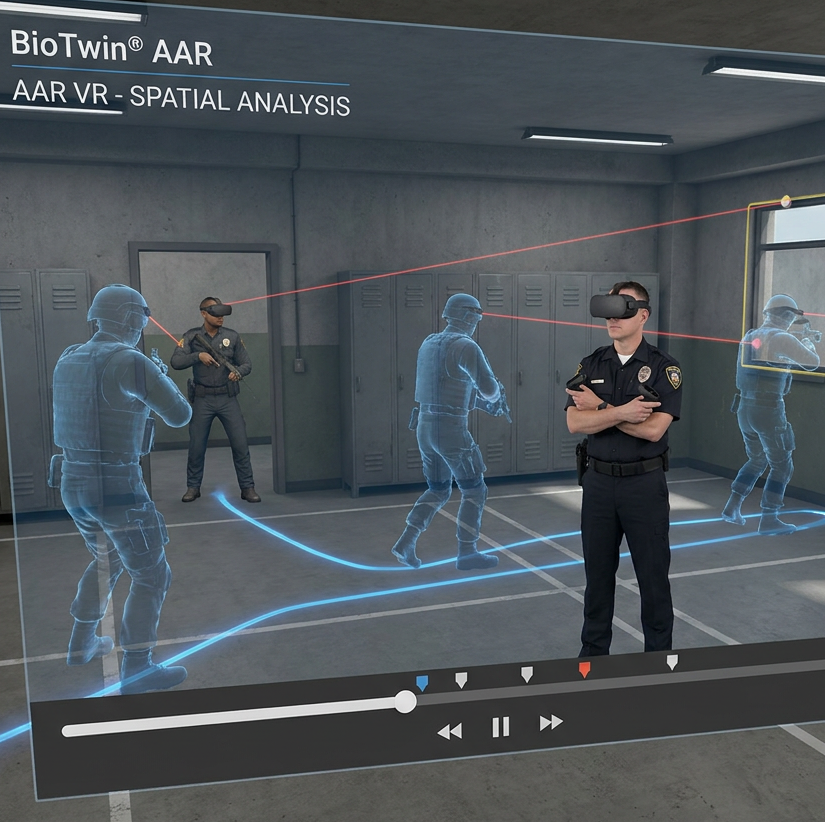
In high-risk environments, procedures exist for a reason. They protect people, safeguard infrastructure, and reduce the likelihood of cascading failure. Across defence operations, nuclear facilities, aviation maintenance, utilities, industrial inspection, and emergency response, procedures reflect decades of operational experience and hard-earned lessons.
However, completing a task and verifying that a procedure was followed correctly are not the same thing.
In many training and operational environments, procedural adherence is still evaluated through observation and confirmation. An instructor watches the task unfold, a checklist is completed, and the procedure is considered executed. What actually happened during the task, however, may be less clear.
Procedure Completion vs. Procedural Adherence
A maintenance sequence may be finished even though a critical inspection point was only briefly glanced at. A firefighter may progress through a hazard assessment yet miss an early visual cue. An operator may complete the correct sequence of steps while operating under stress that altered attention or decision timing.
In these situations the outcome may appear correct, even though the procedure was not executed with the precision it was designed to enforce. Procedures reduce uncertainty, but when evaluation relies primarily on observation and recollection, small behavioural deviations can remain invisible.
The Visibility Challenge
Procedural adherence ultimately comes down to visibility. Instructors and supervisors monitor execution as closely as possible, but complex training environments introduce limits. Multiple participants may operate simultaneously, and critical actions often occur within seconds. Even experienced observers can miss subtle indicators.
As operational environments grow more complex and data-rich, relying solely on observation becomes increasingly fragile.
Making Procedural Execution Visible
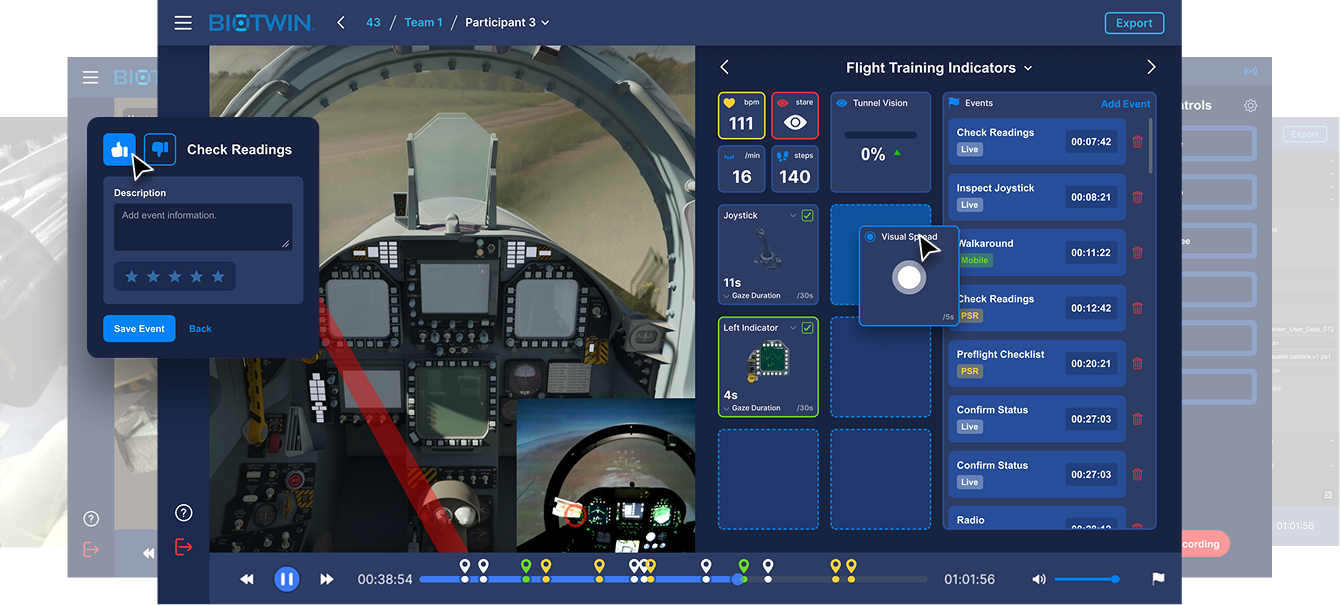
Training modernization is beginning to address this gap by making procedural execution visible. Platforms such as BioTwin® enable instructors to capture synchronized behavioural data during training and inspection exercises using wearable smart glasses.
In inspection and industrial training contexts, trainees perform procedures while wearing EXO Glasses that capture first-person scene video and eye-tracking data. Instructors monitor the exercise in real time through the BioTwin Live Console, where key events can be flagged as the activity unfolds.
After the session, the Post Session Replay (PSR) which is an AAR interface that allows instructors and trainees to review how the procedure actually unfolded. This enables inspection analytics that observation alone cannot provide. Instructors can verify whether inspection points were visually confirmed, whether Areas of Interest (AOIs) received sufficient attention, and whether the intended inspection path and sequence were followed.
Missed components, skipped inspection areas, or incomplete verification steps can then be identified during review.
From Confirmation to Verification
In regulated and high-consequence industries, compliance often relies on documentation. Procedures are signed off, inspection reports are completed, and operational logs confirm that tasks were performed.
When procedural execution can be replayed and reviewed, compliance shifts from confirmation toward verification:
- Inspection coverage becomes visible;
- Sequencing can be examined precisely, and;
- Critical Areas of Interest (AOIs) within equipment panels or inspection zones can be validated to ensure components were not overlooked.
For organizations operating under strict regulatory oversight, this added visibility strengthens both safety and accountability.
Strengthening Safety Through Clarity
Procedures reduce risk, but their effectiveness depends on execution. When behavioural signals remain hidden, organizations must rely on interpretation to understand performance. That approach has worked for decades, but it becomes harder to sustain as operational complexity increases.
Making procedural execution visible introduces a new level of clarity. BioTwin® allowsinstructors review behavioural evidence alongside procedural outcomes, helping trainees understand not only what happened during a task, but how it happened. Organizations can identify behavioural gaps earlier, strengthen compliance validation, and improve training consistency across teams and sites.
In high-risk environments, safety is not defined only by whether a task was completed. It is defined by how consistently procedures are followed, verified, and understood.