When something goes wrong during a police operation, the instinct is often to look for individual error.
Who missed the cue?
Who escalated too quickly?
Who failed to communicate clearly?
But in dynamic policing environments, outcomes rarely belong to one officer alone.
They emerge from teams.
Readiness Is Collective
Modern policing depends on coordination. Officers distribute attention across rapidly evolving scenes, process information differently under stress, and continuously adapt as situations change.
One officer may detect a threat early. Another may be managing radio traffic or crowd movement. A third may interpret the same interaction through a completely different lens based on positioning or cognitive load.
Individually, each officer may be highly capable. But operational performance depends on whether awareness remains aligned across the team.
That alignment is what keeps situations stable.
The Invisible Layer of Team Performance
Most departments still evaluate operations through outcomes:
- Was the suspect apprehended?
- Was force avoided?
- Was the response time acceptable?
Those metrics matter, but they reveal very little about how the team functioned internally while events unfolded.
How synchronized were decisions?
Where did attention focus?
When did situational awareness begin to drift across the group?
These questions are difficult to answer in real time — and even harder to reconstruct afterward using memory alone.
This is where a new generation of human performance tools is beginning to change the conversation.
Making Team Awareness Measurable
Platforms like BioTwin are helping agencies move beyond individual assessment toward something broader: measurable collective performance.
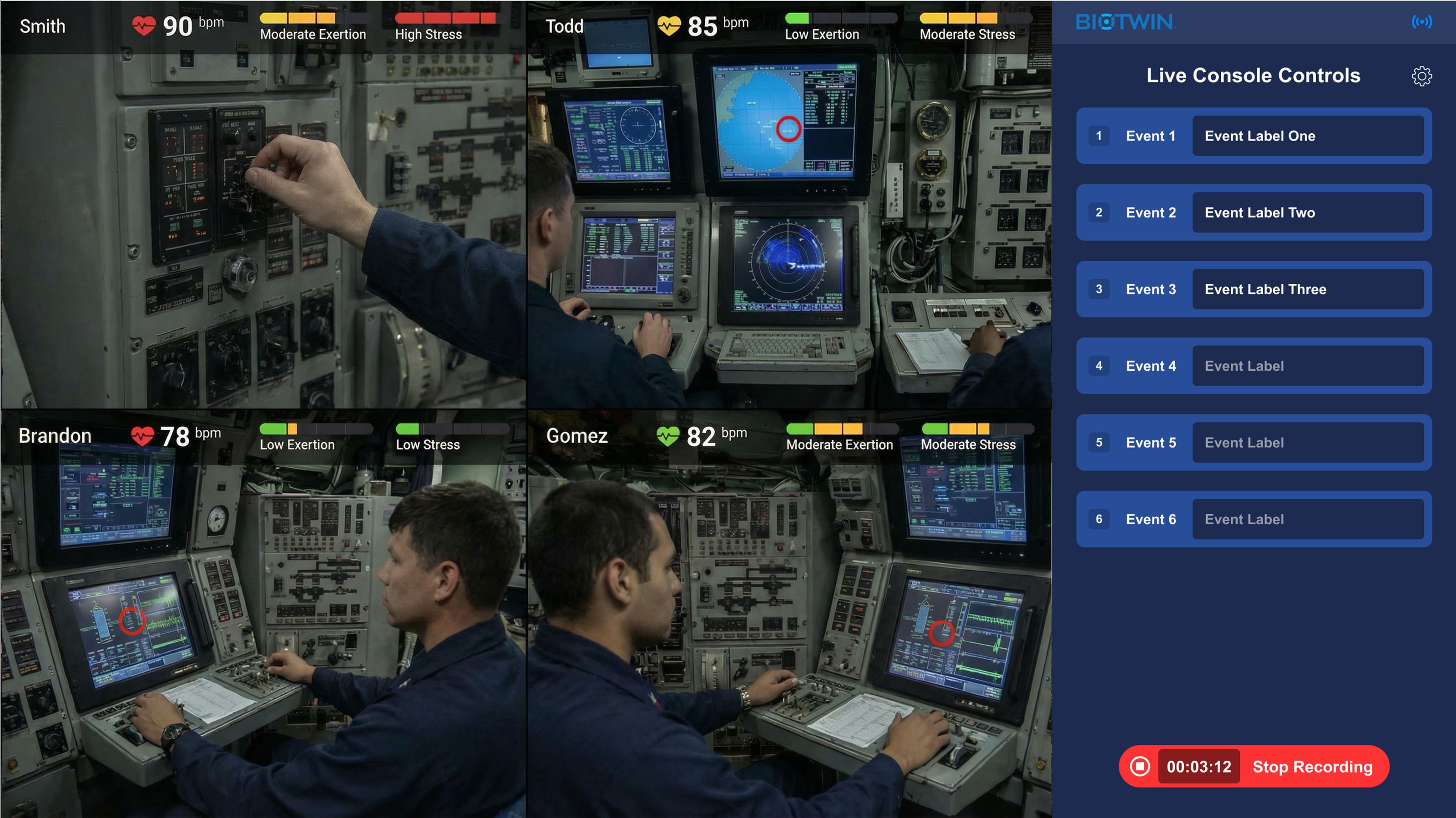
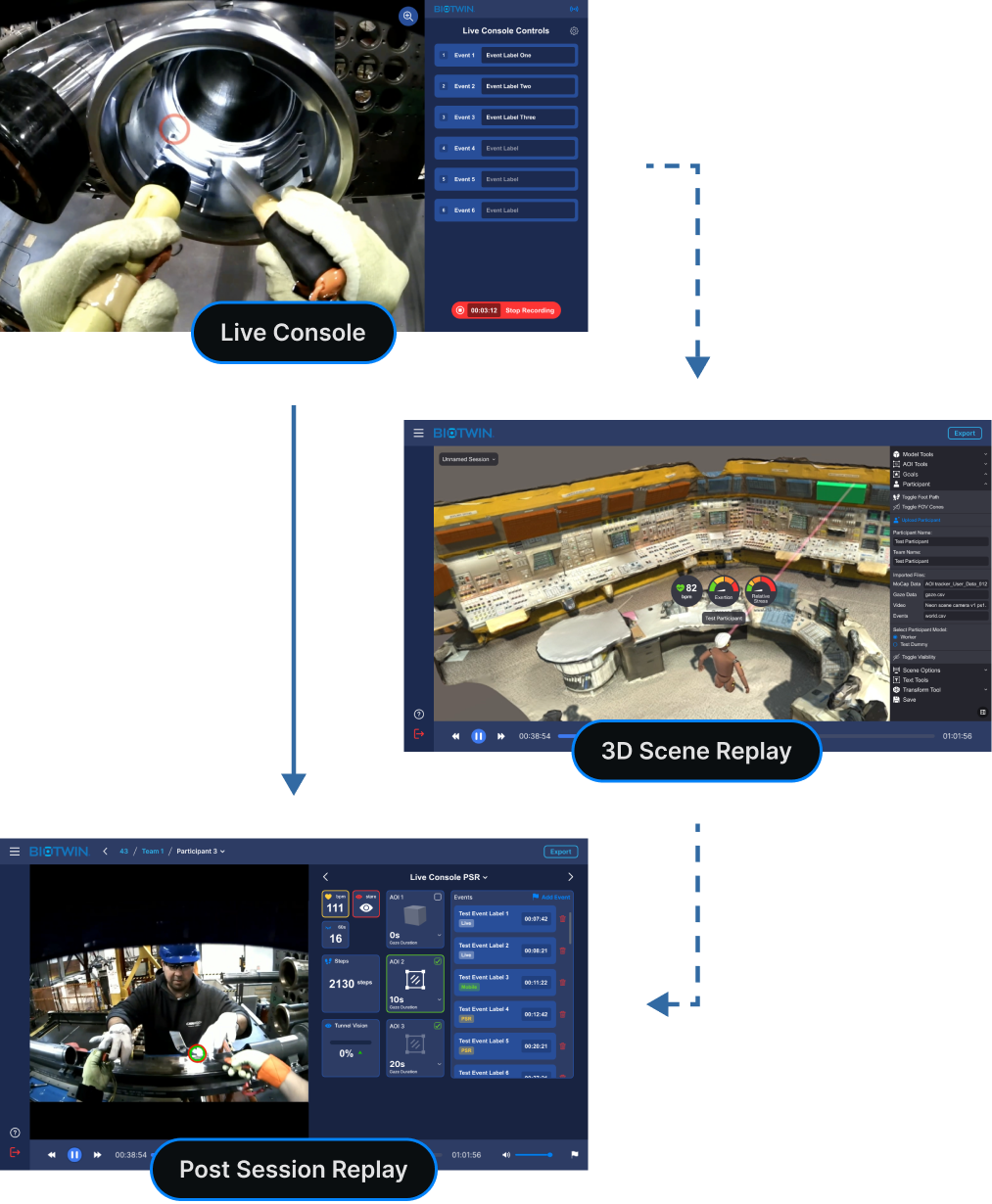
By combining gaze tracking, biometric signals, positional data, and replay analytics, teams can begin to understand how awareness flows across a group during dynamic scenarios.
Not just what happened — but how the team experienced the situation together.
Where one officer focused while another missed the cue.
How stress propagated through the group.
When coordination strengthened — or fragmented.
This creates a new layer of operational visibility that traditional after-action reviews often struggle to capture.
Teams Turn Capability Into Action
Training improves individual skill. Technology strengthens operations. Procedures create structure.
But teams are what transform capability into execution.
Performance becomes collective very quickly. And increasingly, agencies are recognizing that readiness cannot be understood through individual metrics alone.
Because in complex environments, the team is not just part of the response.
The team IS the system.